
Sometimes it feels as if doing nothing…. is all I want to do.
Life, is full. Primary commitments like work and parenting take up the majority of the time we have, various relationships must be maintained, appointments must be attended, and then there’s exercise, life admin and everything else in between. I could list countless more categories that need attending on a daily basis, but they like any of the others are not nothing, they’re something, and if one thing is certain in life, it is that there is always something.
It is this abundance of something’s that gives doing nothing it’s value, it’s rarity shall we say. But the unfortunate paradox is that there is no such thing as nothing. You see, without all the somethings, then the nothing would truly be nothing, but because of the break that nothing gives us from the something, it becomes something in and of itself. So even when we’re do nothing, we’re still doing something. Ah, yes there is always something.
These were the deep and meaningful thoughts I was having to myself the other day as I was doing what I thought was nothing while drinking my morning coffee. Coffee is quite something indeed, although my personal honeymoon period with caffeine has long since passed, it’s purpose in my morning routine these days is less to provide a particular kick and more to keep a state of equilibrium.
Comparing the nothingness to the somethingness, really took the shine off doing nothing. The fact that I had now philosophised nothingness into somethingness meant that I was now doing something, and if I was doing something, then I should at least not be doing nothing at the same time. My aversion to doing nothing on this particular morning was in no way isolated, my relationship with it has grown stale of late, a recent injury allowing us to become much too acquainted with each other.
Injuries suck. There’s something so humbling about realising how much of your everyday experience relies upon the regular function of just one of your many body parts. NBA star Tyrese Haliburton will be without the use of one of his for the next few months, but the timing of his injury was particularly cruel. The 25 year old all-star has been a revelation in this years playoffs. As the lynchpin of his Indiana Pacers, he served up several clutch moments as his team defied all odds to win the Eastern Conference and progress to the NBA Finals. A week ago, during the deciding game 7, the very last game of the season, with just one more win needed, Haliburton collapsed to the ground with a torn achilles. His body had let him down at the worst possible time. His subsequent tweet from his hospital bed was raw and reflective:

“Man. Don’t know how to explain it other than shock. Words cannot express the pain of this letdown. The frustration is unfathomable. I’ve worked my whole life to get to this moment and this is how it ends? Makes no sense.
Now that I’ve gotten surgery, I wish I could count the number of times people will tell me I’m going to “come back stronger”. What a cliche lol, this shit sucks. My foot feels like dead weight fam. But what’s hurting most I think is my mind. Feel like I’m rambling, but I know this is something I’ll look back on when I’m through this, as something I’m proud I fought through. It feels good to let this shit out without y’all seeing the kid ugly cry.
At 25, I’ve already learned that God never gives us more than we can handle. I know I’ll come out on the other side of this a better man and a better player. And honestly, right now, torn Achilles and all, I don’t regret it. I’d do it again, and again after that, to fight for this city and my brothers. For the chance to do something special.
Indy, I’m sorry. If any fan base doesn’t deserve this, it’s y’all. But together we are going to fight like hell to get back to this very spot, and get over this hurdle. I don’t doubt for a second that y’all have my back, and I hope you guys know that I have yours. I think Kobe said it best when in this same situation. “There are far greater issues/challenges in the world then a torn achilles. Stop feeling sorry for yourself, find the silver lining and get to work with the same belief, same drive and same conviction as ever.” And that’s exactly right. I will do everything in my power to get back right.
My journey to get to where I am today wasn’t by happenstance, I’ve pushed myself every day to be great. And I will continue to do just that. The most important part of this all, is that I’m grateful. I’m grateful for every single experience that’s led me here. I’m grateful for all the love from the hoop world. I don’t “have to” go through this, I get to go through this. I’m grateful for the road that lies ahead. Watch how I come back from this. So, give me some time, I’ll dust myself off and get right back to being the best version of Tyrese Haliburton.
-0 Proverbs 3:5-6 “Trust in the Lord with all your heart, and lean not on your own understanding; in all your ways acknowledge Him, and He will make your paths straight.”
A well written post that anyone who has been injured can somewhat identify with. Complete with the initial, crestfallen disappointment, the inevitable refocus of energy into recovery coupled with a determination to get right back to it. Haliburton’s trust in the Lord must be comforting to him, especially the idea (one that I as a not particularly religious modern day agnostic actually really like) that God never gives one more than they can handle. It’s a concept that when leaned on and coupled with a trust in yourself can really help you overcome anything, especially when you think you’ve been given an unjust helping of life’s shit sandwich.
Haliburton certainly received his portion, but he is far from the only person to have suffered the pain of a season ending injury, and many in sports have paid a price much greater than that in the pursuit of doing what they love. Perhaps the most dangerous sport of all is motor racing, and for obvious reasons. The pinnacle of the sport, Formula 1 features drivers going at speeds well in excess of 300 km/ph, with competitors sometimes separated by only tenths of a second. F1 drivers arguably have the best reflexes in all of sport and they need them. With great speed comes great risk, and when it goes wrong it can come at the ultimate cost.
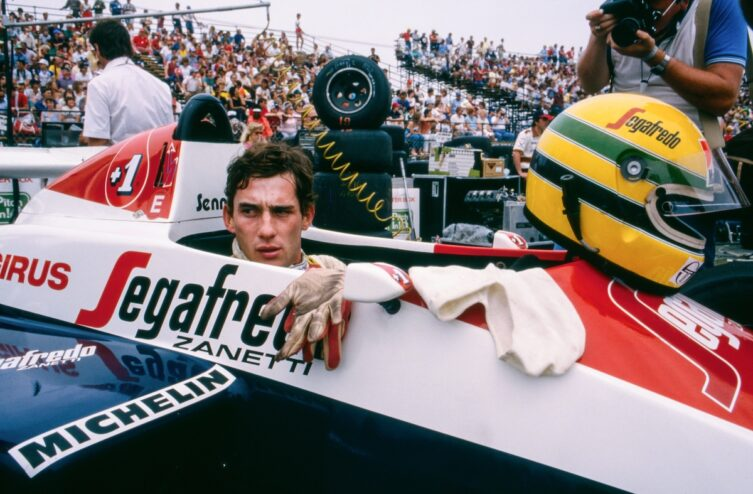
When we think of tragedy on the racetrack, Ayrton Senna is the most obvious name that comes to mind, but we’d be hard pressed to name the other 51 (that’s right 51) drivers who’ve passed away in a race, practice or testing as part of a Formula 1 team. The early days of the sport were especially dangerous, but continued safety upgrades in the car and on the track have reduced the risk substantially in the decades since. There have been just three fatalities in the last 40 years, the most recent being Jules Bianchi, who sadly passed away in 2015 as a result of injuries sustained in the Japanese Grand Prix the year prior.
Death has been a risk associated with sporting contests for centuries from Roman gladiatorial battles, to Aztec ball games that decided the next sacrifice to the sun gods, to the tragic crash-outs that are an ever present risk in the world of motorsport. Sports over time have evolved significantly as lesson upon lesson has been learned, digested and used as an inspiration for a rule change that will hopefully mean that it needn’t be learned a second time. Rules have been continuously adapted to mitigate risk in all sports, and the history of American Football gives us a perfect example of this.
American Football is one of the traditional ‘Big 4’ sports in the USA along with Baseball, Basketball and Ice Hockey. Baseball’s MLB dominates in Japan and Latin America and is the traditional national past-time at home. Basketball’s NBA is a global juggernaut and arguably the most popular sports league of all. Ice Hockey’s NHL dominates Canada, and the colder parts of Eastern and Northern Europe. Football’s NFL has a dedicated fanbase across the world, but it’s international appeal and engagement lags behind its rivals. It may struggle to match the others when it comes to an international audience, but in it’s home country, the NFL reigns supreme. As an outsider, it can be hard to fathom just how much of the American sports pie is taken up by their own version of football.
Despite being carried mainly by viewership within it’s home country, the NFL is the world’s richest sports league in terms of income generation. It’s annual revenue of 19.3 Billion US Dollars, is a full third higher than second place. Of the world’s 50 most valuable sports teams, 29 are NFL franchises. The dominance doesn’t just stop at finances, the 68,954 average fans that the league drew per game in 2024 made it the number one attended sports league in the world, 28,000 more than second place. Modern day NFL stadiums are the pinnacle of sporting architecture, regularly topping the billion dollar mark to construct and looking more and more like something out of a sci-fi movie. The dominance doesn’t just stop at the top level. College Football is arguably even more popular at a grassroots level, with games attracting mammoth crowds.
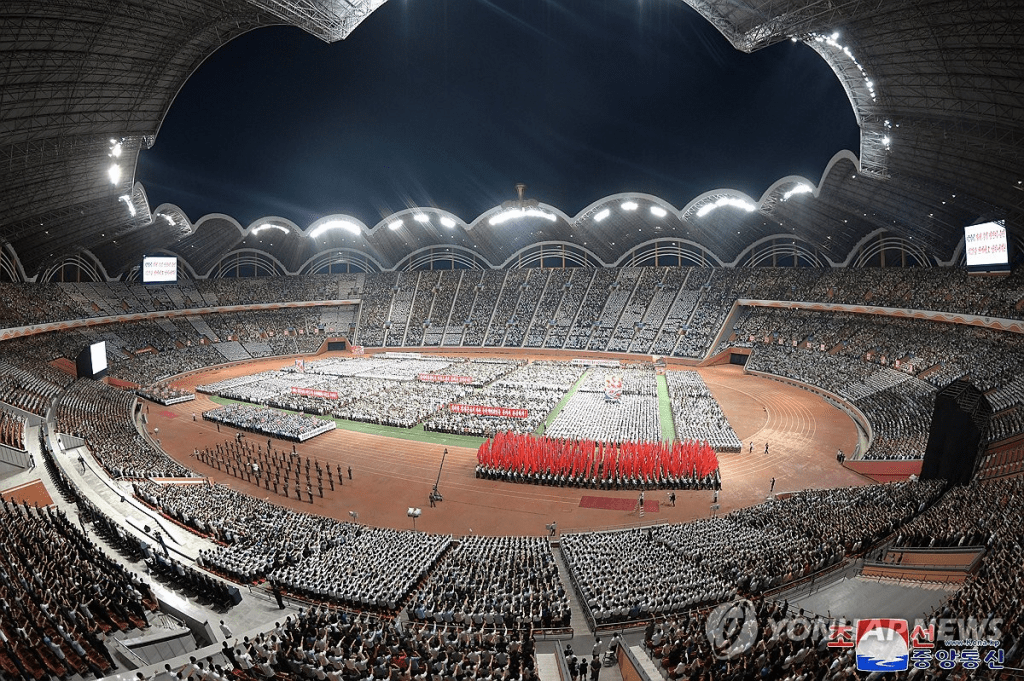
There are 11 stadiums in the world that have a capacity for more than 100,000 spectators. The recently built Narendra Modi stadium in Ahmedabad, India tops the list, which also features the National Stadium of North Korea (the demand for tickets to a Kim Jong-Un rally is exceptionally high), and Melbourne’s sporting colosseum, the MCG. The other 8 are all US College football stadiums and they are routinely packed to the rafters with current students, former students and local fans. College rosters are filled from the best High School talent the nation has to offer, and they are spoiled for choice, with over 1,000,000 registered players at the High School level each year.
The three tiers of American Football – Professional, Collegiate and High School co-exist seamlessly. High School games are played on Friday night, after the school week ends. College games are played on Saturday. Professional games are played on Sunday. Despite the NFL’s extreme popularity, it does not hold games on Friday’s, and only starts playing games on Saturday’s once the College season has ended. This symbiosis means none of the levels are ever competing with each other, and keeps the game strong from the grassroots to the very top. It has made the clashing of pads and helmets an ever present part of the American experience, but those pads and helmets were a long way off when the sport was in it’s infancy.
Originally played at the Collegiate level in the mid 19th century, old American football by all accounts resembled something of a nonsensical version of volleyball and regular football until rugby reached the country’s shores in the 1870’s. Different schools had different rules, but the ability to run with the ball proved popular, and made rugby the foundation of the game. From there the rugby like rules were continuously adapted. The contested scrum was replaced by the uncontested snap as a means to restart the game, with each team lining up opposite one another along a line named the ‘line of scrimmage’. The uncontested nature of the snap along with limitless plays (known as ‘downs’) led to teams playing conservative attritional keep ball, which led to boring games with little scoring.
The stagnation of scoring led to a rule change giving a team 3 downs to advance the ball 5 yards, if they failed to do so, they would forfeit possession to the other team. The implementation of the 3 downs rule, led to individual yard markers, giving the football field its distinctive look and a nickname that stands to this day, the ‘gridiron’. While the snap made it easier for the team on offense to hold the ball, that didn’t stop the other team from trying their best to get it back and contests at the line of scrimmage were vicious. With players right in each others faces pre-snap, fields laden with mud in the midst of winter, and the value of each yard gained and lost of paramount importance, dirty play and dark arts were commonplace, and the sport developed a reputation for extreme violence.
Concerns about the violence in the game went to the very top, with President Theodore Roosevelt threatening to ban football altogether in 1905. This was following a season during which a staggering 19 players had died on the field. Roosevelt was one of the most popular presidents in American history, and was affectionately known as ‘Teddy’. Despite his distaste for violence on the gridiron, Roosevelt was in-fact an icon of masculinity in his time. He was a war hero, a cattle rancher and was known to begin his mornings (even in the winter) by going for swims in the freezing Potomac river. But even the man who had led cavalry charges in the Spanish-American war had to admit that 19 deaths on a sports field were 19 too many, and action had to be taken.
Officials from 62 top universities held an emergency meeting and a new organization was created, one that would later be named the National Collegiate Athletic Association (NCAA). The NCAA is the governing body of US collegiate sports to this day. To reduce the risk of harm in the game, several rule changes were agreed upon. A ‘neutral zone’ was created between the offensive and defensive lines which reduced the ability for dirty pre-snap actions. The amount of yards required for a first down was increased from 5 to 10, thus increasing the value of creativity over share brute force to advance the ball. The deaths subsided and the sport survived, a year later the forward pass was introduced and American football never looked back.
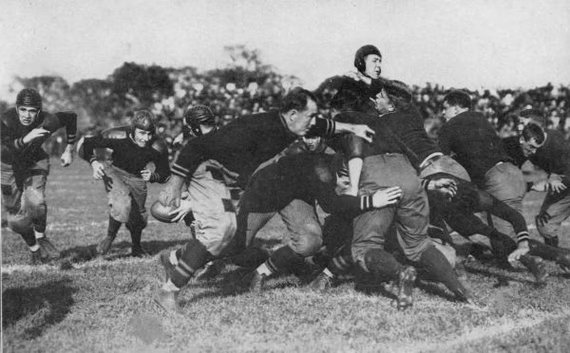
Throughout the decades that followed, personal protection for American football players became commonplace and then standardized. Helmets, large shoulder pads, thigh pads, knee pads and a cup all became a part of the standard protection worn on the gridiron. The proliferation of padding has meant that the sport has often been looked down upon by players and fans of rugby as ‘soft’ but American Football has an exceptionally high injury rate. Much of this is ironically due to the harder hitting that the extra protection allows, players can fly into tackles in a way they never could without it.
Recent scientific studies have shined the spotlight on the role of protective equipment in the game, and whether it is actually protecting the athletes at all, with a particular focus on the benefits or otherwise of the helmet. The short term protection provided by the helmet, has enabled tackling techniques that cause long term issues. A long standing culture of ‘leading with the head’ leading instead to a prevalence of concussions and players developing severe symptoms both during their careers and later in life.
Dave Duerson was a man who could no longer live with the effects of concussion from his playing days. A part of two Super Bowl winning teams, he was good enough to sustain an 11 year career in the NFL. Retiring in the early nineties, he was tragically back in the news 20 years later, taking his own life. He shot himself through the chest and left messages to his family that he wished to preserve his brain for research into the effects of Chronic traumatic encephalopathy (CTE). CTE is a neurodegenerative disease that can occur due to repeated head traumas and has been found to be especially common among former NFL players, 345 of whom have received a posthumous diagnosis.
Attitudes towards head injuries have changed significantly and the modern game has strict protocols in place for any player determined to have suffered a concussion. Several modern day players have simply quit the game, retiring early to avoid the possible ill effects on their long term health. Greats of the game have come forward with their later life experiences, with many advising that had they known the risks they never would have played. Despite the knowledge modern players now have, the old school attitude of playing through anything still exists and many know the risks and carry on regardless.
Miami Dolphins quarterback Tua Tagovailoa is the most high profile victim of concussions in the game today. After already missing significant time from head knocks earlier in his career, he suffered his third recorded concussion in the second week of the 2024 NFL season. It was due to a sickening collision, and there were question marks as to whether it would be in his best interests to return again. Despite some calls to retire early out of concerns for his own safety, he came back just six weeks later, and was upfront when questioned about his return to the game. He simply stated that he loved football and that he loves it to “…the death of me.”
While not necessarily a wise move, there’s something oddly human about Tagovailoa’s attitude, the downplaying of danger, the acceptance of the risks associated with doing something that makes him feel alive. It’s the same attitude early formula 1 drivers had when pushing the limits on the racetrack. It’s the same attitude that will no doubt drive Tyrese Haliburton to work his socks off to recover from his torn achilles and come back a better player. Isn’t it also ironic, that in a sport obsessed with safety, it is the helmets and protective gear that have contributed to the danger?
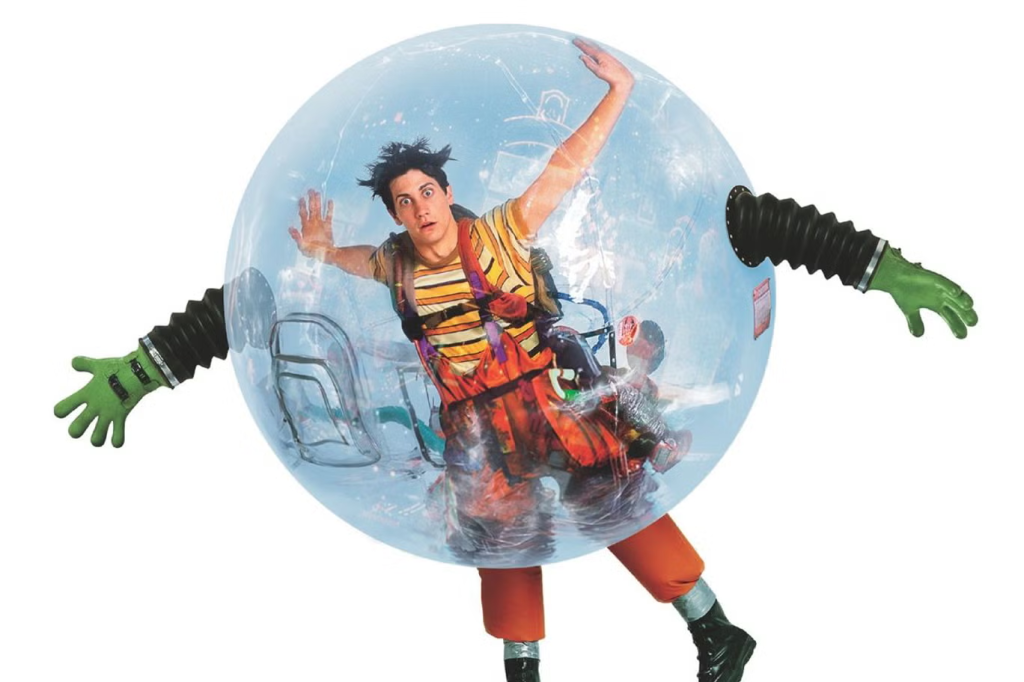
I was reminded of an old movie I once watched as a kid called ‘Bubble Boy’. In it the main character, played by Jake Gyllenhaal, is raised to believe he has no immunities, and therefore spends his life walking around in a sanitized bubble to avoid catching any of the possible germs that could mean his end. The film follows his unique life and his trials and tribulations fitting into a world where everyone else lives bubble free.
By the end of the film he can no longer stand this claustrophobic existence and exits his bubble only to realize that everything is fine and he can live in the world after all. His mother invented the whole no immunities thing due to her overprotective nature. Bubble Boy thrives outside of the bubble, marries the girl of his dreams and lives happily ever after. His mother simply apologizes and all is forgiven, Munchausen’s by proxy leading to someone spending their entire life believing they’ll die if they ever leave a plastic sphere isn’t that much of a big deal anyway.
Bubble Boy leaving his bubble and Tagovailoa continuing to play football are both similar in that……………, well they’re not really at all that similar, but I thought the bubble boy anecdote was enjoyable and you could draw the longest of bows and admit that they both illustrate that human need to keep going, and to achieve more. They both also shared a disregard for their own safety, a trait that was exhibited by a boxer often believed to be the ‘Greatest of All Time’. Muhammad Ali.
Muhammad Ali’s storied career is well known, but for the benefit of those who are not sporting afficionado’s I will offer a brief overview. Born Cassius Clay (he changed his name after converting to Islam), Ali won a gold medal at the 1960 Rome Olympics as a Light Heavyweight boxer. He turned pro and in 1964 as a 7-1 underdog defeated former mob street enforcer Sonny Liston to become the Heavyweight Champion of the World.
He became an instant sensation, and global icon. He was known for his fast moving, exciting style in the ring, but even more so for his silver tongue and limitless confidence outside it. He refused a draft notice to fight in the Vietnam War, so had his titles stripped, only to win them back later on. He was the dominant figure in what is now seen as boxing’s golden era.
In 1974 Ali was attempting to regain his Heavyweight crown, this time from the younger and highly favoured George Foreman (long before he started making kitchen appliances). Foreman was at the time undefeated, with 40 wins, 37 of them by knockout. The fight was scheduled to be fought in Kinshasa, Zaire (modern day Democratic Republic of Congo, on a side note Kinshasa is the largest French speaking city in the world, so pocket that information and if it ever comes up in a pub quiz, you can thank me). The bout went down in history as ‘The Rumble in the Jungle’.
Foreman was the harder hitter, but Ali adopted a new strategy known as ‘rope a dope’, spending the majority of the fight against the ropes, offering little in the way of offence and taking every punch Foreman could throw at him. He absorbed this punishment until picking his moment in the eighth round to dismantle the now exhausted champion, knocking him out and reclaiming the title. Despite it’s effectiveness the ‘rope a dope’ strategy required him to take a lot of hits to the head, and the toll on his body was already evident by the latter stages of his career.
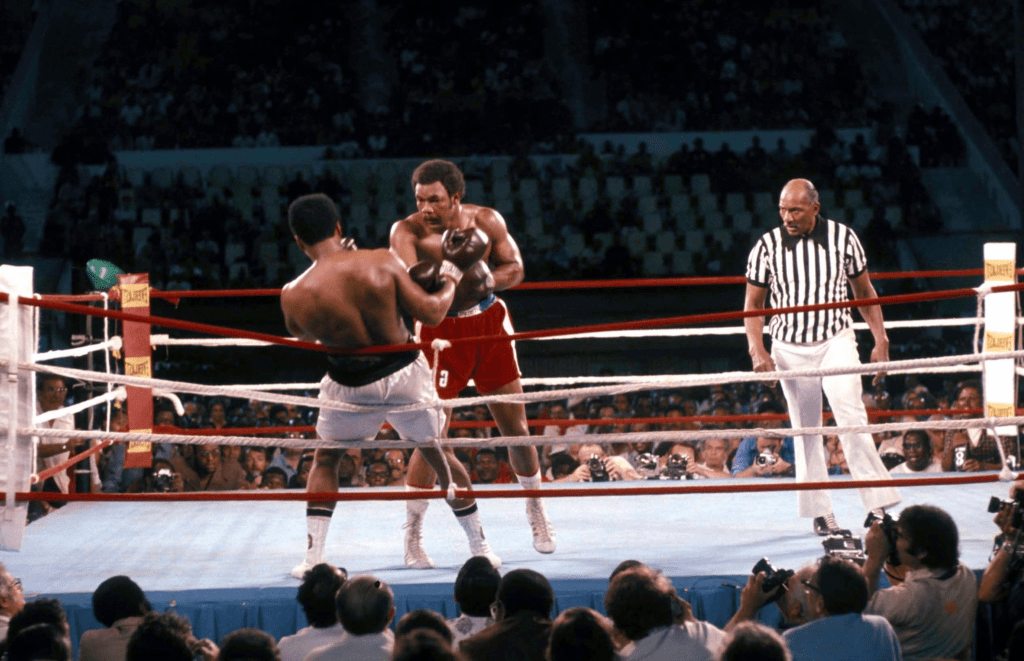
Ali came public with a diagnosis of Parkinson’s Disease in 1984, and his condition worsened, with his ailing health clear to anyone who saw him in public in the late 20th century. Ali and his physician denied that the condition had anything to do with his boxing career, but to most the link between the thousands of padded head hits he sustained in his younger years and the symptoms of his illness in his later life, was obvious. Despite the toll the sport had taken on his health, Ali never regretted his career choice. Despite a chronic neurogenerative disease, Ali has cemented his name in history forever. He reached the absolute top of the sporting mountain and maybe for him that was worth the trade-in.
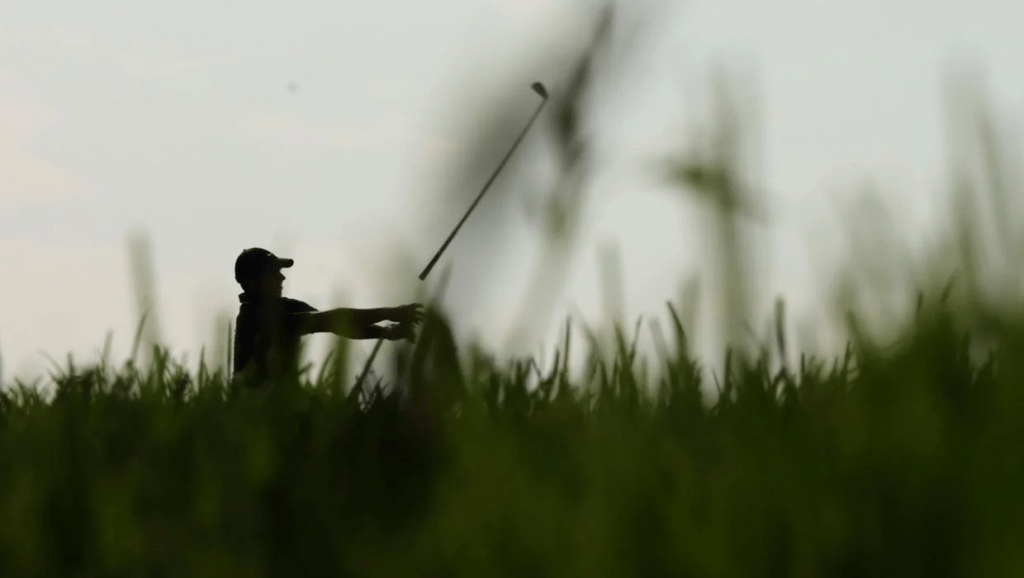
Rory McIlroy recently climbed to the top of his personal mountain. Rory had long since developed a reputation as one of the great chokers in golfing history. Following a barnstorming early career in which he won 4 majors by the age of 25, McIlroy then entered a drought that saw him go 11 years without another. This included several defeats clutched from the jaws of victory, most notably his collapse at the 2024 US Open, where he inexplicably missed a 3 foot putt on the last hole to give up his lead and hand the title to Bryson DeChambeau. He has been the best golfer of his generation but his nerves consistently got the better of him when it mattered most.
This April he finally laid his demons to rest, winning the Masters in a sensational playoff victory, to become only the sixth golfer to complete a career grand slam. The victory was emotional, upon sinking his winning putt, he collapsed to the ground in tears. It was hard not to get misty eyed. He’d finally done it, his major drought ended, his transformation from choker to all-time great complete, the relief must have been incredible. He collected his Green Jacket, and can now play at Augusta National every April for the rest of his life. But his euphoria has seemed to be short lived.
McIlroy’s next major tournament was the PGA Championship, and the come down from his Masters triumph was apparent. He finished in a tie for 47th, had his driver deemed ‘non-conforming’ in a routine club check and declined all media interactions, continuing to avoid them in the weeks that followed. Upon resuming media duties, his interactions with members of the press were notable for his terse demeanour, and general rudeness. It was clear to see that the Northern Irishman was not in a good place. At the US Open, he threw a club after one poor shot, and cracked a tee box marker in two following another.
His behavior didn’t go un-noticed, with former professional golfer Paul McGinley commenting that “…. he looks fed up to me. He looks like he’s had enough of everything. Whether it was the emotional release of everything that’s gone on in his career, I don’t know, but he’s not himself…… something is eating at him. He hasn’t let us know what it is, but there’s something not right”. There could be any number of things going on in McIlroy’s life that are causing his current malaise but regardless it appears that the view from the top of his own personal mountain is not as beautiful as he’d imagined. Rory’s far from the only person to feel this way, for another example we’ll go back to the NFL and look at one of the all-time greats of the gridiron.
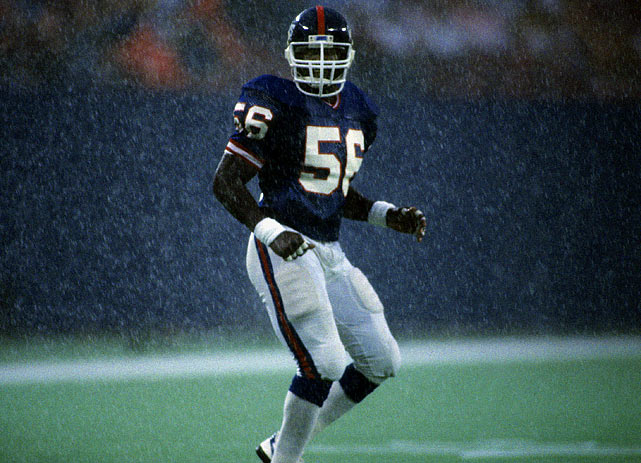
Lawrence Taylor was an absolute specimen, described by sportswriter Paul Zimmerman as ‘…an emissary from another planet’. He emerged in the early 1980’s and terrorized opposing offences and quarterbacks, spending the entirety of his 12 year NFL career with the New York Giants. He is universally considered the greatest defensive player in the history of the game, with his combination of size, speed, skill and recklessness not seen before or since. He was a cultural icon, and his universal appeal was noted by Boston comedian Bill Burr when he reminisced that in the 80’s Taylor’s was the only New York sports jersey that could be worn in his home town without consequence. ‘LT’ was just that guy.
Taylor was a heavy drug user and played under the influence of crack cocaine from early in his career, admitting to spending thousands a day on the habit. He obtained urine from his team-mates (who obviously wanted him on the field) to pass drug tests. Far from slowing the defender down, the drugs seemed to have no negative effect on his performances. They possibly helped him play with his trademark disregard for his or anyone else’s safety and added to the terror his opponents already had when facing him. Quarterbacks had in Taylor an opponent like no other – a 1.91 metre, 110kg beast, who they knew was the best to ever do it was coming straight for them…………. and he’d just smoked some crack in the locker room.
With Taylor leading the way, his New York Giants inevitably won the Super Bowl in 1986, the ultimate team honour also coming with the ultimate individual honour as he won the historically quarterback dominated Most Valuable Player award (he was the second and to this day last defensive player to win it) in the same season. He had reached the pinnacle of his sporting career, but this is how he felt at the time:
“When the Super Bowl was over … Everyone was so excited, but by then I felt deflated. I’d won every award, had my best season, finally won the Super Bowl. I was on top of the world right? So what could be next? Nothing. The thrill is the chase to get to the top. Every day the excitement builds and builds and builds, and then when you’re finally there and the game is over … And then, nothing.”
Taylor’s thoughts on reaching the summit were recently echoed by McIlroy who said of his recent Masters triumph that he’s climbed “….my Everest in April, and I think after you do something like that, you’ve got to make your way back down, and you’ve got to look for another Mountain to climb.”
Taylor was well known for playing through injury during his career, with a particularly noteworthy performance coming in a 1988 game against the New Orleans Saints. Suffering a torn pectoral, he instructed his medical team strap it up, went back on to the field and with the use of only one arm recorded seven tackles and three sacks to help his Giants win the game. This was two years after winning it all, and the great man still didn’t want to stop, even after tearing his shoulder up. He needed to keep going. Just like McIlroy he needed another mountain to climb.
Perhaps that was what I needed while I was experiencing an existential crisis in my relationship with nothingness. I just needed another mountain to climb, something big to dig my teeth into, a something to get me out of bed in the morning, a something to further vindicate my own existence, a something that’s better than nothing. Well there are no mountains where I live, and even if there were I’ve no desire to climb one anytime soon, but I did do the modern day suburban equivalent. I went for a walk.
I live a good distance from the beach, not on it, but close enough that a brief walk is all that’s needed to go and experience it. I have a great love for waves, and find watching them hypnotic. On this morning as I was walking along the foreshore, the waves were crashing in and out but were contained by the stone walls that have been constructed right at it’s edge. There’s something a little magical about walking alongside the vastness of the ocean, a gargantuan inhabitable place that would suck you up never to be returned if you ventured too far into it, but also tamed to the extent that the houses only metres away have remained there for decades.
The wind was cascading about the place as it does, it was windy, but not the level of windy that provokes irritation. The sky was overcast, but not dark and gloomy. Everything was just kind of okay. I’ve long been an advocate for enjoying the simplicity of things around us. If we can let go of the chase for a little while, and tune into our surroundings, we can experience the beauty of simple sights and sounds. The best part of that everyday beauty is that it lets us breathe and leaves us refreshed for our next summit. The inevitable mountain that we will decide we must topple next. Despite the ease of going for a brief stroll, nature has an element of conquer and some of the most beautiful views do come after a decent climb.

Which leads us back to the NBA Finals. This year featured two true underdog franchises. The Oklahoma City Thunder and the Indiana Pacers are from comparatively small markets, and both played a team focused game that led them past their richer, big city rivals. Either way the winner was going to represent a fairytale like triumph, a plucky team from a smaller city, well run and winning a championship for the little guy. Despite this narrative, the games had a decline in viewership, attracting over 1 million less eyeballs on average than the two previous years. We love an underdog story, but when there’s only underdogs left we lose interest. We love to root for David, but we need a Goliath for him to slay. We need our hero to have a mountain to climb.
 NIL-ALL Blog